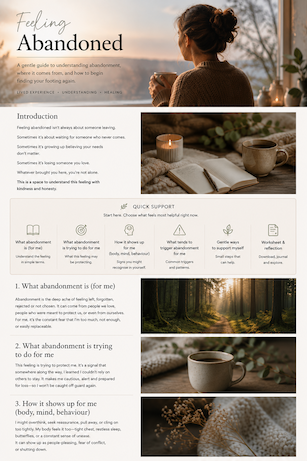
Abandonment: when I feel left, forgotten, or replaced(even if no one says it out loud) What abandonment is (for me) Abandonment is the feeling that I’m going to be left — emotionally, physically, or practically. Sometimes it’s literal (someone leaves). Sometimes it’s quieter: they stop showing up, stop caring, stop protecting me. For me it can feel like: I’m alone with this, and I don’t matter enough for anyone to stay. What abandonment is trying to do for me Abandonment is my system trying to prevent being left unprotected. It pushes me to: scan for signs of withdrawa secure connection quickly (sometimes urgently) avoid conflict so I don’t“cause” someone to leave prepare for loss so it hurtsless It’s a survival response, not apersonality flaw. Peaceful forest path symbolising hope. How it shows up for me (body, mind, behaviour) In my body: hollow stomach, chest ache, throat tight restless energy or heavy collapse insomnia, appetite changes sudden panic when messages go unanswered In my mind: “They’re done with me.” “I’m too much.” “I knew it would happen.” replaying conversations to find what I did wrong In my behaviour: over-texting / over-explaining/ trying to fix it fast fawning: becoming extra agreeable to keep closeness testing: pulling away first tosee if they follow shutting down: “fine, I don’t need anyone” clinging to unsafe people because being alone feels worse Comfort during emotional healing. What tends to trigger abandonment for me Silence, distance, cancelledplans, slow replies Being excluded, overlooked, or “forgotten” People choosing others over me(real or perceived) Conflict, boundaries, or saying no (fear it will cost me the relationship) Systems failing to protect (a different kind of abandonment) What makes abandonment worse Unclear communication (mixedsignals) Being in relationships wherecare is conditional When I’m already overwhelmed,exhausted, or ashamed When I don’t have othersupports (all eggs in one basket) Abandonment vs related feelings (how I separate them) Rejection: “I’m not wanted.” Abandonment is “I’m being left.” Neglect: ongoing lack of care/attention; abandonment can be a moment or apattern. Loneliness: feeling alone; abandonment is the fear/experience of being leftalone. Betrayal: someone breaks trust; abandonment can happen without betrayal, butthey often overlap. Grief: what comes after abandonment becomes real. What I confuse abandonment with Independence: sometimes I call it “I’m fine” when I’m actually bracing for being left. Intuition: sometimes it’s a trauma alarm, not a true read of the present. Being needy: needing consistency and care is human. Journal and tea for emotional reflection. What abandonment is telling me I need (needs + boundaries) What I need: consistency (words + actions matching) clear communication (evensimple reassurance) safe attachment: people who don’t punish me for having needs multiple supports (so oneperson isn’t my whole world) self-anchoring: “I won’t abandon myself.” Boundaries that protect me: I won’t chase people who only show up when it suits them I won’t accept disappearing as“normal” if it destabilises me I won’t trade my dignity for closeness What helps me (in the moment + longer term) What helps me in the moment(0–5 minutes): Name it: “This is abandonment fear.” Reality check: “What do I know vs what am I assuming ?” Regulate first: longer exhale,feet on floor, unclench jaw. One sentence: “I can survivethis feeling without chasing.” What helps me the same day(5–60 minutes): Write the story my brain istelling — then write 2 alternative explanations. Reach out to a safe person (notthe person I’m panicking about) for grounding. Do one stabiliser: food,shower, tidy a corner, short walk. If I need to communicate: sendone clear message (no essays). What helps me longer term: build a “secure base” list:people + places + routines that don’t disappear practise tolerating spacewithout self-erasing strengthen self-trust andself-worth (so distance doesn’t equal danger) choose relationships withrepair (they come back, they explain, they care) grieve old abandonments so thepresent isn’t carrying the whole past Quiet moment of self-reflection. When abandonment becomes too much (gentle note) If abandonment fear turns intopanic, shutdown, or unsafe choices, that’s a sign my nervous system isoverwhelmed. If I’m repeatedly triggered inthe same relationship, I have to ask whether it’s actually safe — not just familiar. A real moment (optional) Vignette ideas:The moment silence felt likedanger — and what I needed instead. A time I didn’t chase, and Iproved to myself I could stay with the feeling. Related emotions + tools Abandonment often sits near: Rejection, Loneliness, Shame, Anxiety, Fear, Grief Abandonment can flip into: Anger, Numbness, People-pleasing, Detachment Tools that support me here: Journalling Prompts , 10 Ways to feel safer , Abandonment Triggers
Want to go deeper?
End-of-post note(disclaimer) I’m not a therapist. I’msharing my lived experience and what I’ve learned along the way — because themore we talk about these experiences and emotions honestly, the more chance wehave of protecting future generations.
Read more about this project here: About 101 Emotions